

Out of butter? Great! Here are some heart-healthy recipe substitutions from our friends at Food and Health Communications. You may also download the chart in a handy PDF format for your kitchen.
| Instead of | Portion | Saturated Fat(g) | Use | Saturated Fat(g) |
| DAIRY Butter* |
1 Tbsp |
7.5 |
Vegetable oil, broth |
0.0 |
| Cream |
2 Tbsp |
7.0 |
Evaporated skim milk, |
0.0 |
|
Cream cheese |
2 Tbsp |
6.5 |
fat-free half & half Light cream cheese |
3.5 |
| Eggnog |
1/2 cup |
5.5 |
Fat-free eggnog |
0.0 |
| Half and half |
2 Tbsp |
2.0 |
Fat-free half and half |
0.0 |
| Ice cream |
1/2 cup |
6.0 |
Frozen yogurt |
1.5 |
| Sour cream |
2 Tbsp |
3.0 |
Fat-free sour cream |
0.0 |
| Whipped cream |
2 Tbsp |
3.0 |
Fat-free whipped cream |
0.0 |
| Whole milk |
1 cup |
5.0 |
Skim milk |
0.0 |
| Totals |
45.5 |
5.0 |
*For baking recipes, you should use trans-fat-free margarine and reduce the amount by half. Substitute applesauce or baby food prunes. For finishing vegetables, use butter-flavored spray. For mashed potatoes and stuffing, decrease fat by half and use light, trans-fat margarine.
| MEAT/POULTRY | ||||
| Bacon |
3 slices |
3.0 |
Turkey bacon* |
1.5 |
| Gravy |
1/4 cup |
14.0 |
Defatted gravy |
1.0 |
| Beef, prime rib** |
3 oz |
12.0 |
Beef tenderloin, fat trimmed |
3.0 |
| Beef, T-bone |
3 oz |
7.0 |
Beef tenderloin, fat trimmed |
3.0 |
| Turkey, dark with skin |
3 oz |
7.0 |
Turkey breast, no skin |
0.7 |
| Sausage |
3 oz |
9.0 |
Vegetarian sausage* |
0.5 |
| Totals |
52.0 |
9.7 |
||
*Read the label, nutrition facts vary by brand.
**Restaurant portions are often triple this amount, so saturated fat could go to 36g per portion!
NOTE: For heart-healthier cooking, you should limit animal protein and emphasize more whole grains, beans, soy protein, fish (baked, not fried), fruits and grains in your meals. Think of meat as a condiment and use less in each serving. A 3 oz. serving of meat is the size of a deck of cards.
| MISCELLANEOUS | ||||
| Coconut |
1 oz |
6.5 |
Toasted pecans or almonds |
1.5 |
| Hydrogenated shortening * |
1 Tbsp |
3.0 |
Vegetable oil or trans-free margarine |
0.2 |
| Whole eggs |
2 |
3.0 |
Egg white or non-fat egg substitute |
0.0 |
| Totals |
12.5 |
1.7 |
||
*This product is hydrogenated and contains additional trans-fat; read the nutrition facts label.
By: Denice Taylor, RD, LD
© Food and Health Communications
Woodholme encourages a healthy diet and proper nutrition as one aspect of maintaining heart health. The nutrition information and recipes are presented for informational purposes only and are not intended to take the place of one-on-one advice from your doctor. Please follow your personal physician’s recommendations if any recipes, ingredients, or advice found here conflict with what your doctor

 Most people think of exercise as a way to keep cholesterol under check and to assist with weight loss. While exercise without weight loss has little influence on total or LDL cholesterol, research indicates that aerobic exercise does seem to change the type of LDL that the body produces. Small, dense LDL is very atherogenic. People who exercise regularly produce LDL that is larger and lighter and less likely to form plaque.
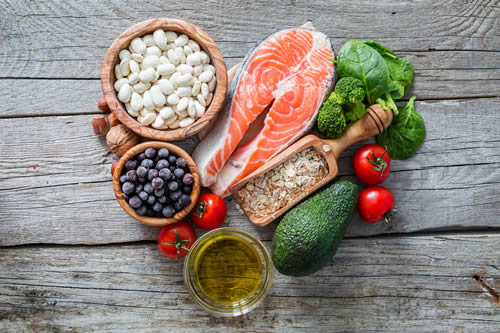 The American Heart Association (AHA) released nutrition recommendations for healthy eating based on research published in the journal Circulation. The AHA Blueprint for Healthy Eating summarizes the scientific evidence on the healthiest food choices into practical tips health professionals can share with their patients to prevent cardiovascular disease. While the Blueprint contains no new, earth-shattering information, it is a good summary of practical, realistic suggestions that can be incorporated to fit each person’s taste preferences, cultural food heritage, and budget. Choosing foods that provide essential vitamins and minerals; and are also low in calories, sodium, added sugar and saturated fat, helps achieve and maintain a healthy body weight, decrease risk of cardiovascular disease, and improve overall health.
 Heart disease prevention